
Essential Tips for Success in CBSE Board Exams 2026
Overview of CBSE Board Exams 2026
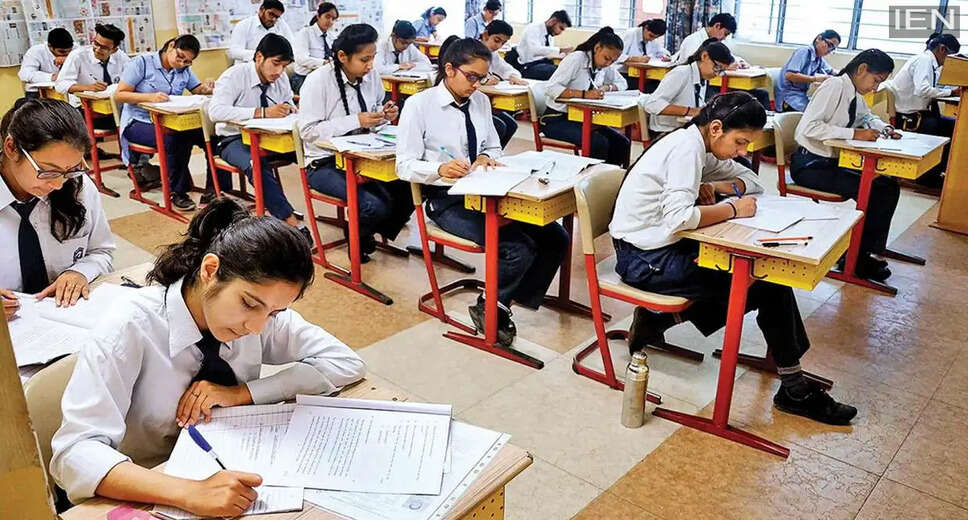
The CBSE Board Exams 2026 are currently taking place for students in Class 10 and Class 12, representing a pivotal moment in their academic journey. These exams will run until April 9, 2026, and are being held not only across India but also in 26 other nations. This year, approximately 4.36 million students are participating, making it one of the largest school-level examinations globally.
Managing Exam Anxiety
As the board exams commence, it's common for students to experience anxiety. Concerns such as 'What if I forget my studies?' or 'What if the questions are unexpected?' can create undue pressure. This stress can adversely affect both preparation and performance on exam day. Experts assert that these exams assess not just memory but also time management, conceptual clarity, and strategic thinking. With the 2026 exam pattern emphasizing competency-based and application-oriented questions, rote memorization is becoming less effective.
Preparation Tips for CBSE Board Exams 2026
If you're feeling overwhelmed or struggling with your studies, consider these practical tips to enhance your preparation while maintaining calmness and confidence.
1. Understand the Syllabus and Exam Weightage
A common mistake students make is chasing after numerous reference books. For CBSE exams, NCERT textbooks are the primary study material. Most questions are based on NCERT content, either directly or indirectly.
Begin by printing the official syllabus and placing it at your study area. Mark off chapters as you complete them to visually track your progress, which helps maintain motivation and prevents last-minute panic. Additionally, familiarize yourself with the chapter-wise weightage for each subject, prioritizing chapters that carry more marks.
2. Engage in Active Learning
Merely reading textbooks repeatedly does not ensure retention. To enhance learning, implement active learning techniques. After studying a topic, summarize key points in your own words to reinforce understanding and improve recall.
For subjects like Science and History, utilize flowcharts, timelines, and diagrams to clarify complex concepts. Visual aids can help you remember answers more effectively and present them better during exams. Create small revision cards for formulas, definitions, and important dates for quick reviews.
3. Practice with Previous Year Papers and Mock Tests
Working through previous years’ question papers is a highly effective strategy for exam preparation. Aim to solve at least the last two to three years’ papers to grasp the exam format, question styles, and marking schemes.
Mock tests can enhance your speed, accuracy, and presentation of answers. After each test, review your mistakes thoroughly to identify weak areas and revise them. This approach not only solidifies your preparation but also boosts confidence before the final exam.
4. Smart Time Management
Effective time management is crucial during board exams. Develop a realistic daily study schedule that incorporates revision, practice, and short breaks. Avoid setting unrealistic targets to prevent burnout.
During exams, allocate time wisely for each section. Tackle questions you are confident about first, leaving more challenging ones for later. This strategy maximizes your score and minimizes stress.
5. Prioritize Health and Sleep
A fatigued mind cannot perform optimally. Ensure you get 7–8 hours of quality sleep each night during exam preparation. Sleep is essential for the brain to consolidate information into long-term memory, which is vital for exams.
Stay hydrated, consume light and nutritious meals, and limit junk food. Engaging in short walks or light stretching can refresh your mind and enhance concentration.
Final Thoughts for Students
While the CBSE Board Exams 2026 are significant, they should not compromise your mental and physical well-being. With proper planning, effective study techniques, and a composed mindset, achieving good scores is entirely possible. Remember, consistency and clarity are more valuable than last-minute cramming.
Trust in your preparation, maintain a positive outlook, and give your best effort. Exams are merely a step in your educational journey, not the ultimate goal. Continue learning and growing, and success will follow.