
Understanding the Differences Between BSc Physics and BSc Applied Physics
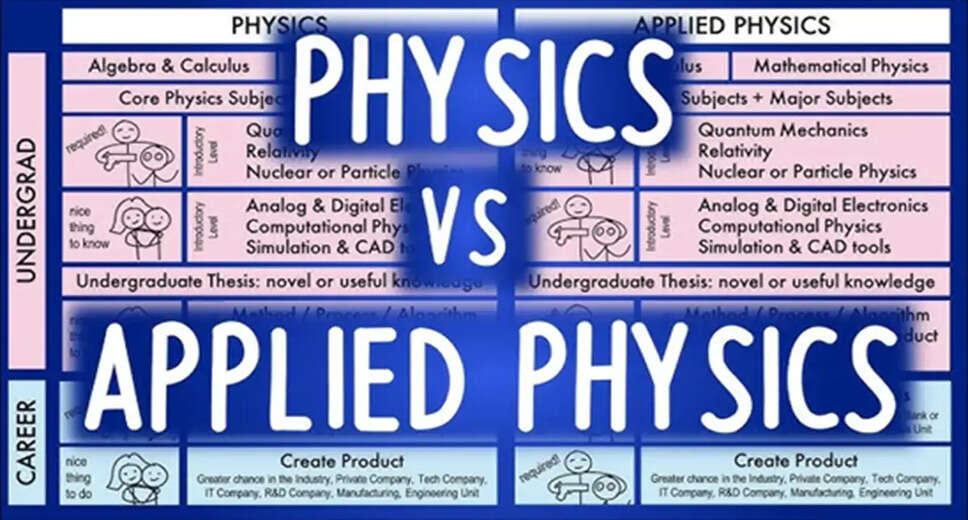
BSc Physics vs. BSc Applied Physics
Introduction: After completing Class 12, students encounter a variety of subjects and streams for their undergraduate education. Within the Bachelor of Science (BSc) program, there are multiple specializations to choose from. Specifically, students can opt for either BSc Physics or BSc Applied Physics. This raises the question: what distinguishes the two? While both fields are rooted in physics, the term "Applied" suggests a different focus.
Understanding the academic emphasis and potential career paths for each course is crucial before making a decision. Let's delve into the differences between BSc Physics and BSc Applied Physics.
Defining BSc Physics:
BSc Physics entails a comprehensive exploration of the core principles of physics along with the scientific theories that underpin them. The curriculum typically includes subjects such as mechanics, electromagnetism, thermodynamics, optics, quantum physics, nuclear physics, and electronics. The primary aim of this program is to equip students with a robust theoretical and experimental grasp of physics.
Graduates of BSc Physics have the option to further their studies with an MSc in Physics or pursue a PhD. Career paths may lead to opportunities in research, education, scientific institutions, and government roles through competitive exams.
Understanding BSc Applied Physics:
BSc Applied Physics focuses more on the practical application of physics concepts to solve real-world challenges and in technical domains. The coursework often includes topics such as electronics, semiconductors, optics, materials science, instrumentation, energy, and nanotechnology.
This specialization has a closer relationship with technology and industry. Graduates can seek careers in fields related to electronics, semiconductors, energy, optical devices, instrumentation, and technology.
Which Option is Superior?
Determining whether BSc Physics or BSc Applied Physics is superior is subjective. If your interests lie in the foundational aspects of physics, scientific inquiry, and you plan to pursue an MSc or PhD, then BSc Physics may be more suitable. Conversely, if you are drawn to technology, electronics, semiconductors, sensors, materials, and the practical uses of physics, then BSc Applied Physics could be the ideal choice for you.
Disclaimer: This content has been adapted from original sources. While modifications have been made for clarity, the content remains the intellectual property of its original authors and website.