
Supreme Court Rules on BCI's Authority Over Law Students
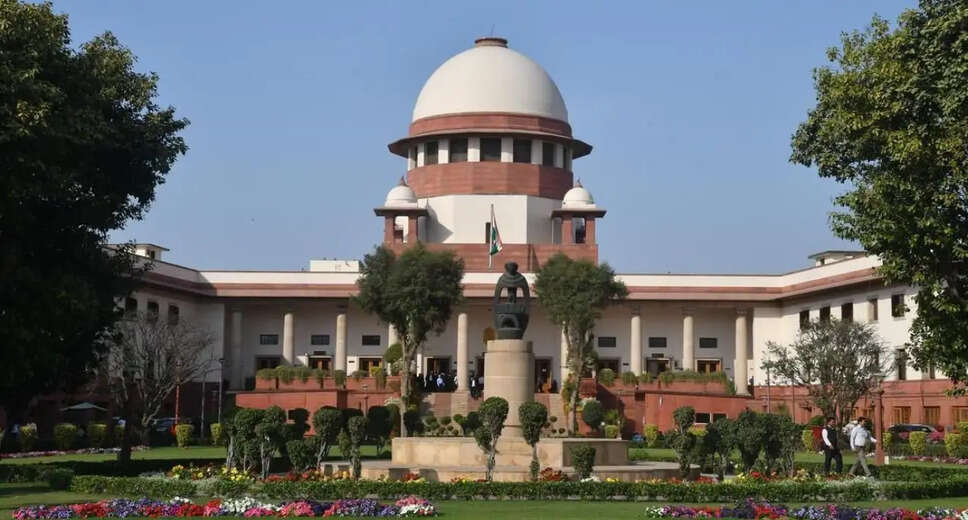
Supreme Court's Landmark Decision
The Supreme Court has recently delivered a significant ruling, stating that the Bar Council of India (BCI) lacks the legal authority to regulate the conduct of law students. According to the court, the power to take disciplinary action against students lies solely with the respective educational institutions, not with the BCI.
This ruling emerged from a dispute involving students at NALSAR University of Law in Hyderabad, who raised objections regarding the proposed participation of Chief Justice Surya Kant in the university's 2026 convocation ceremony. During this controversy, the BCI had issued several notifications.
— News Media (@NewsMedia) September 3, 2026
The bench, comprising Chief Justice Surya Kant, Justice Joymalya Bagchi, and Justice V Mohana, annulled two notifications issued by the BCI. These notifications were retracted within hours following public criticism. The court also upheld a previous order that prohibited the BCI and state bar councils from taking any punitive actions against students or faculty members.
The court clarified that merely enrolling in a law course does not place students under the regulatory framework of the BCI, meaning the BCI cannot exert control over law students.
The ruling has sparked considerable reactions on social media, with many users celebrating it as a victory for democracy and student rights. One user remarked that the BCI's attempt to target an entire batch over a single letter was thwarted by the Supreme Court's clear stance on its lack of authority over students.
The Supreme Court’s ruling that the BCI does not have the power to regulate the conduct of law students in the recent NALSAR row is so refreshing. A win for NALSAR students and their freedom of speech, is a win for students and democracy everywhere.
— Ms Sanctimonious (@mssanctimonious) September 3, 2026
Another user noted that this decision is a positive step towards accountability, emphasizing that no institution should misuse its power against students. Many have hailed it as a triumph for freedom of expression, asserting that the victory for NALSAR students is ultimately a win for both students and democracy.