
Supreme Court Directs NCERT to Restrict Experts Linked to Controversial Textbook Chapter
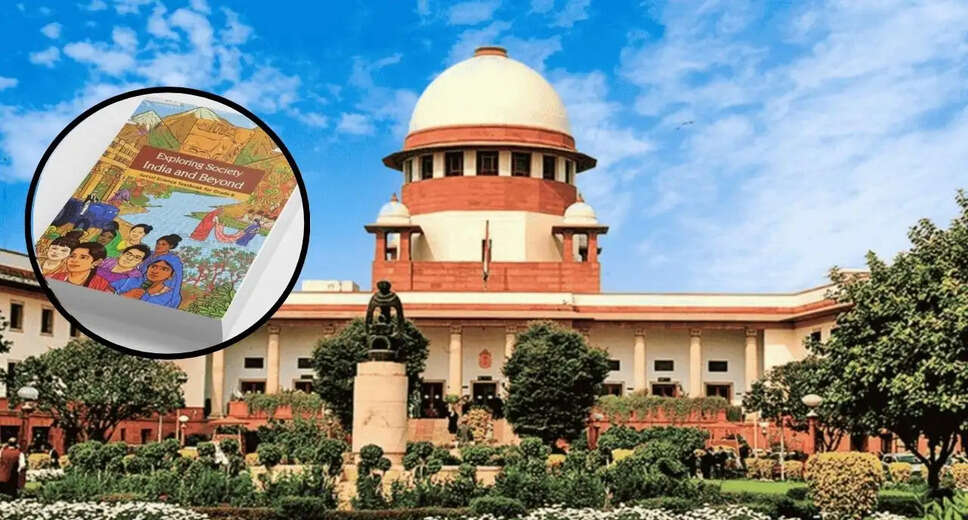
Supreme Court's Directive
New Delhi: The Supreme Court has instructed the central government and the National Council of Educational Research and Training (NCERT) to prohibit three experts—Michele Danino, educator Suparna Diwakar, and legal researcher Alok Prasanna Kumar—from participating in the preparation of school curricula or holding any positions in state bodies due to their involvement with a controversial chapter in the Class 8 textbook.
The court also directed the government to form a committee of experts from the relevant field to review such matters. This committee will include a former judge, an academic, and a senior legal expert.
Discussion on Corruption in Judiciary
This controversy revolves around a chapter in the NCERT Class 8 textbook that discusses corruption within the judiciary, which has sparked widespread criticism.
During the hearings, Justice Surya Kant expressed serious concerns regarding offensive and irresponsible comments made about the judiciary on social media.
Court's Firm Stance
He stated that the court would not spare individuals making derogatory remarks about the judiciary and emphasized the need to uphold the dignity of judicial institutions.
Justice Surya Kant instructed the government to identify platforms and individuals responsible for such statements to initiate legal action. The court remarked, 'The law must take its course,' and noted that actions would also be taken against those residing outside the country.
The court stressed the importance of maintaining the dignity of the judiciary and indicated that derogatory comments made on social media would be taken seriously.
NCERT Issues Apology
NCERT released a detailed statement on social media, acknowledging that inappropriate content was 'inadvertently' included in the chapter. They described it as a completely unintentional error and offered an unconditional apology on behalf of the director and members. The council reiterated its commitment to honoring the judiciary and assured that such mistakes would not occur again.
Background of the Issue
A significant shift has been observed in the country's education system. Recently, NCERT released a new Class 8 social science textbook that addresses corruption in the judiciary. The new book highlights various challenges faced by the judiciary, identifying corruption as a critical issue. This problem undermines public trust at various levels, particularly making access to justice difficult for the poor and marginalized. The book references a statement made by former Chief Justice B.R. Gavai in July 2025, where he noted that corruption and misconduct erode public confidence, which can only be restored through transparency and accountability. This issue subsequently reached the Supreme Court.