
Supreme Court Directs Nationwide Implementation of APAAR ID Following Odisha High Court Ruling
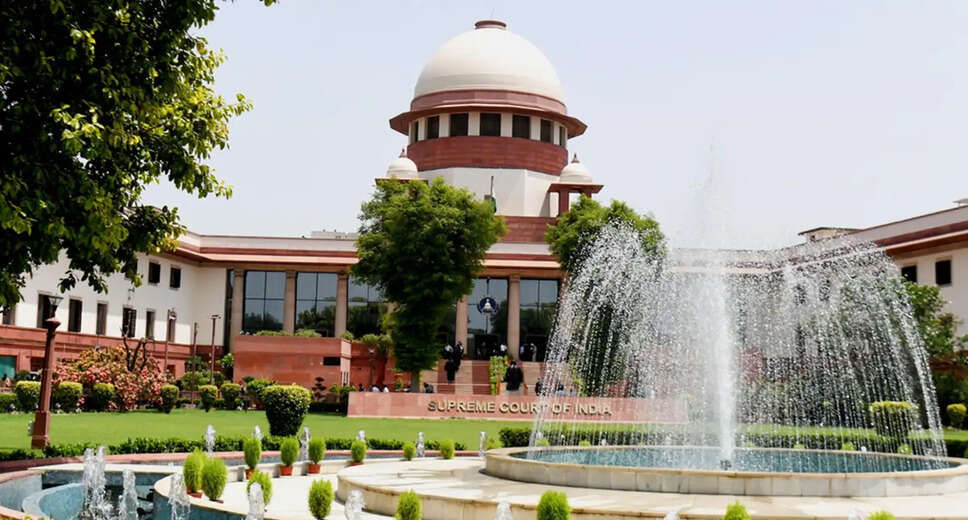
Supreme Court's Directive on APAAR ID
Overview of the Supreme Court's Decision: On Monday, the Supreme Court announced its intention to instruct the Central Board of Secondary Education (CBSE) to enforce the Odisha High Court's ruling across the nation. This ruling requires that the model consent form for the Automated Permanent Academic Account Registry (APAAR) ID must allow parents to choose whether to consent, decline, or withdraw from the program.
Understanding APAAR ID
What is APAAR ID?
The APAAR initiative was introduced by the Ministry of Education as part of the National Education Policy (NEP) 2020. It generates a unique 12-digit permanent ID for students, which is designed to securely store all academic records, including marksheets, degrees, and achievements in co-curricular activities.
Key Features of APAAR:
- Automated Permanent Academic Account Registry
- Unique 12-digit student ID
- Launched under NEP 2020
- System for secure digital academic record maintenance
Supreme Court's Remarks
Details from the Hearing:
A bench consisting of Chief Justice Surya Kant, Justice Joymalya Bagchi, and Justice V. Mohan reviewed a petition from parents of four students who contested the APAAR scheme's validity, claiming it mandates students to obtain an Aadhaar ID.
During the proceedings, the Supreme Court highlighted that the Central Government did not contest the Odisha High Court's December 2025 ruling. Consequently, the Court will direct the CBSE to apply this ruling nationwide.
The bench stated, "We will instruct the CBSE to implement this decision across the country, as the High Court's order has been accepted. We also urge the CBSE to investigate these matters further."
The Court indicated that a formal order regarding this issue would be published later, and it would also instruct the CBSE to address concerns raised by the petitioners about consent and data security.
Arguments from the Petitioners
Concerns Raised:
- APAAR is being effectively made mandatory.
- Linking it with Aadhaar is argued to be unconstitutional.
- Compliance with the Digital Personal Data Protection (DPDP) Act is questioned.
- Lack of an 'opt-out' option in the consent form.
- Demand for the 'Right to be Forgotten'.
Senior Advocate Indira Jaising, representing the petitioners, argued that despite the government's claims of the APAAR scheme being voluntary, children are essentially coerced into participating, as the scheme lacks a legal foundation. She emphasized that since APAAR is linked to Aadhaar, obtaining an Aadhaar number becomes a de facto requirement for acquiring an APAAR ID.
Referencing the 2019 K.S. Puttaswamy (Aadhaar) judgment, Jaising contended that children cannot be forced to obtain Aadhaar. She asserted that making APAAR mandatory for examination eligibility would breach that ruling.
She stated, "The right to education is a constitutional right. Mandating a child to obtain Aadhaar and APAAR to sit for an examination is unconstitutional."
Furthermore, she expressed that the scheme does not fully adhere to the provisions of the DPDP Act, raising significant concerns about informed parental consent, the right to withdraw consent, and the security of students' personal data.
Jaising criticized the current consent form as resembling a standard contract, which does not genuinely allow parents to refuse consent or withdraw from the scheme.
She urged the court to mandate that the CBSE and schools obtain parental consent in line with Section 6 of the DPDP Act.
Additionally, she raised concerns about the long-term storage of children's academic records, advocating for students to have the "Right to be Forgotten" and the ability to withdraw consent in the future.
Chief Justice's Observations
Chief Justice's Perspective:
The scheme is intended to enhance the education system.
It should not be viewed with skepticism.
It will aid in record-keeping and monitoring the teacher-student ratio.
CBSE circulars cannot override existing laws.
However, the Chief Justice expressed some reservations about a blanket challenge to the scheme, noting its goal of establishing a unique academic identity for each student and improving the education system. He remarked, "Not everything in the country should be viewed with suspicion. This is a positive step."
The Chief Justice indicated that this unique ID would help education officials maintain accurate student records, implement the curriculum, and monitor metrics such as the teacher-student ratio.
In response, Indira Jaising argued that even if the scheme's objectives are valid, it must still comply with constitutional standards regarding legality, necessity, and proportionality. The Supreme Court further noted that CBSE circulars would be subject to the DPDP Act and could not supersede existing laws.