
South Korea's New Anti-Cheating Measures for College Entrance Exams: A Lesson for India
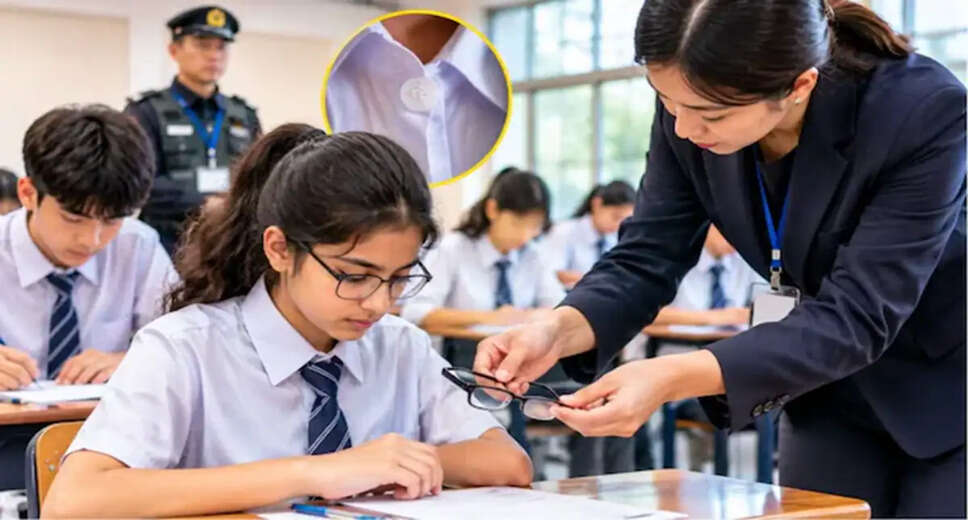
Enhanced Security for JEE/NEET Exams
JEE/NEET Exams: Merely checking admit cards and identity documents is no longer adequate to deter cheating during examinations. South Korea has introduced rigorous measures for its largest college entrance exam, including thorough inspections of candidates' eyeglasses, clothing, and even shirt buttons. An additional 8,400 invigilators will be present at exam centers, and those caught cheating may face a ban from future exams for up to a decade. This increased security comes in response to a scandal where a top performer in a national tax accountant exam confessed to using hidden cameras, smartphones, and AI to gain answers. This situation is particularly relevant for India, where cheating incidents involving electronic devices have been reported during significant entrance exams like NEET and JEE.
Inspection Protocols for Candidates
Eyeglasses must be removed for inspection; stickers to be placed on shirt buttons.
South Korea has rolled out specific anti-cheating protocols for the ‘Suneung’ college entrance exam, set for November 19. Also referred to as the College Scholastic Ability Test (CSAT), candidates wearing eyeglasses will be required to place them on their desks prior to entering the exam hall. Invigilators will inspect the frames for hidden cameras or smart technology. Additionally, candidates' clothing will undergo scrutiny, focusing on shirt sleeves, collars, and buttons, as officials are concerned that small cameras or recording devices could be concealed in these areas. To mitigate this risk, stickers will be affixed to shirt buttons to prevent their use for hiding recording devices. Candidates are advised to refrain from wearing clothing with buttons.
Increased Staffing at Examination Centers
8,400 Additional Staff to be Deployed at Examination Centers
The South Korean government has significantly bolstered its surveillance measures to combat cheating during exams. According to reports, around 8,400 additional personnel will be stationed at examination centers. Of these, approximately 1,800 will focus on identifying cheating involving smart devices and electronic equipment, while about 6,600 will monitor the corridors outside examination rooms and surrounding areas. Candidates will be prohibited from bringing smartphones, smartwatches, smart glasses, or any camera-equipped devices into the examination halls. Those suspected of hiding electronic devices may also be screened with metal detectors.
Significance of the 'Suneung' Examination
Over 550,000 Candidates to Appear for the 'Suneung' Examination
To grasp the importance of this South Korean examination, one must consider the number of participants and the educational context. More than 550,000 candidates are anticipated to take the 2026 'Suneung' (College Scholastic Ability Test) across roughly 1,300 examination centers nationwide. This exam is crucial as it determines university admissions. Given that securing a place at a prestigious institution can greatly impact future career opportunities, the government makes extensive preparations each year to ensure the examination runs smoothly.
Comparative Analysis with Indian Entrance Exams
How Does the South Korean Examination Compare to NEET and JEE?
South Korea's 'Suneung' examination can be likened to entrance exams in India, such as NEET and JEE. Millions of students in India participate in these exams to gain admission into medical and engineering colleges. In terms of candidate numbers, Indian examinations are significantly larger in scale. While over 550,000 candidates are expected for South Korea's 'Suneung' in 2026, a staggering 1,999,895 candidates appeared for India's NEET-UG 2026. Additionally, 1,538,468 unique candidates participated in both sessions of JEE Main 2026. This comparison underscores the vast scale of major entrance examinations in India, highlighting the necessity for stringent monitoring, prohibition of electronic devices, and strict measures against cheating.
Social Media Insights
PC Social Media