
Parliamentary Committee Highlights Challenges in Implementing Third Language Education
Concerns Over Third Language Implementation
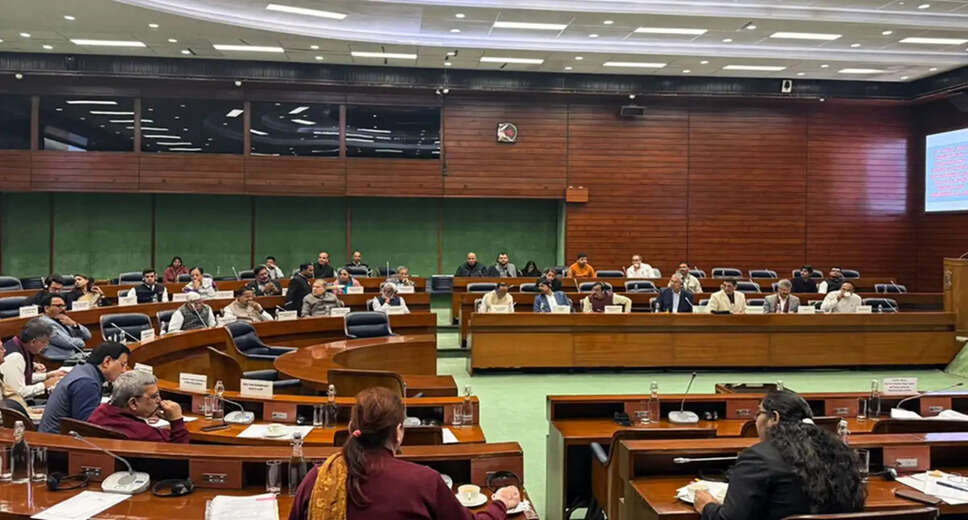
Parliamentary Committee Findings: A recent report from a parliamentary committee has indicated that schools were inadequately prepared for the introduction of a third language starting in Class 6. The committee expressed concerns about the ambiguity surrounding the hiring of language staff, the availability of educational resources, and the language selection process, which has led to increased anxiety among students, educators, parents, and school management.
This information is part of the tenth report from the Estimates Committee (2026-27), presented in the Lok Sabha on Wednesday. The report addresses budgetary and policy considerations for ensuring affordable and quality education across the nation, including an evaluation of the Central Board of Secondary Education (CBSE).
The committee acknowledged that the Union Ministry of Education has made significant strides under the National Education Policy (NEP) 2020 to enhance instruction in native languages and promote multilingual education in early schooling. It noted that the Ministry, in partnership with states and Union Territories, has made progress in applying the three-language formula and the R1, R2, and R3 language framework.
Advancements in Language Education:
Textbooks for subjects such as Mathematics, Science, and Social Science have been translated into 22 scheduled languages. Additionally, bridge courses and electronic content have been created to support students' learning in line with the new curriculum.
The report also emphasizes the use of innovative tools, including 'Jaadui Pitara' (a play-based learning kit) available in 22 languages, the nationwide language awareness initiative 'Bhasha Sangam', and 121 mother-tongue primers developed in collaboration with the Central Institute of Indian Languages (CIIL).
Moreover, organizations like the Kendriya Vidyalaya Sangathan (KVS) have provided vital instructional support by employing contract teachers skilled in local languages. However, despite these valuable resources, the committee noted that the Ministry had not sufficiently anticipated the needs for study materials, teacher training, and language instruction staff.
The committee pointed out that while the 'third language' initiative was launched for Class 6, schools were not given adequate time to prepare, particularly concerning the recruitment of language teachers, the provision of study materials, and clear guidelines on language selection. This has resulted in stress for students, educators, parents, and school authorities.
Committee Recommendations:
The committee urged the Ministry to accelerate the creation of textbooks, study materials, and handbooks, including their translation into regional languages, to ensure timely distribution to States and Union Territories (UTs).
Furthermore, it recommended that the Ministry take all necessary actions to support State and UT education boards in hiring teachers capable of teaching children in their native languages during foundational and preparatory educational stages.
Additionally, the committee advised the Union Ministry of Education to develop a comprehensive, state-specific distribution strategy to guarantee that translated textbooks, multilingual electronic content, and 'Jaadui Pitara' kits are delivered to every rural and government school before the start of each academic year.