
New Screen Time Regulations for Schools in Gautam Buddha Nagar
New Guidelines on Screen Time in Schools
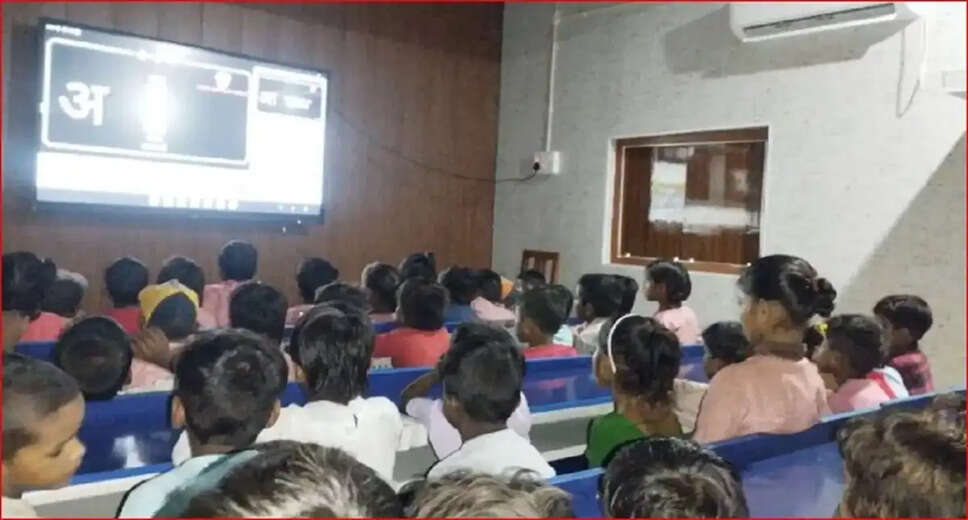
In response to the increasing reliance on digital education and concerns about its impact on children's eyesight, the administration of Gautam Buddha Nagar (Noida-Greater Noida) has implemented a crucial directive. This new order mandates that all government, aided, and private educational institutions in the district must limit the amount of 'screen time' associated with digital and smart boards.
The latest regulations prohibit the continuous use of smart boards in classrooms, reinstating the requirement for traditional blackboards. The administration has established specific screen time limits based on grade levels: primary students are allowed a maximum of 30 minutes of smart board usage per day, while upper primary students may use them for up to 60 minutes daily. Additionally, students must take a break from screens every 20 minutes during digital board usage to rest their eyes.
This initiative follows numerous complaints from parents' associations, who reported that many private and non-government schools were excessively using digital boards for various activities, including displaying textbook content, conducting classwork, and assigning homework. As a result, children were reportedly spending 4 to 5 hours daily in front of screens, leading to early vision issues, headaches, and stress. The administration has appointed magistrates and nodal officers to ensure strict adherence to these new guidelines.
**Essential Guidelines for Educational Institutions**
Schools are required to utilize blackboards, whiteboards, or greenboards for everyday teaching, note-taking, and writing questions and answers. Smart boards should only be used for explaining complex topics, showing educational videos, or displaying crucial digital teaching materials. Continuous display of textbook content on screens is prohibited. Schools must also comply with standards regarding classroom lighting, screen brightness, and the distance between students and screens. Mandatory eye examinations for students will occur every three months, with results shared with parents. Furthermore, all schools are encouraged to implement activities such as 'digital-free periods', 'digital zero days', and 'digital detox' in their curricula.