
New Bill Introduced to Combat Exam Paper Leaks with Tougher Penalties
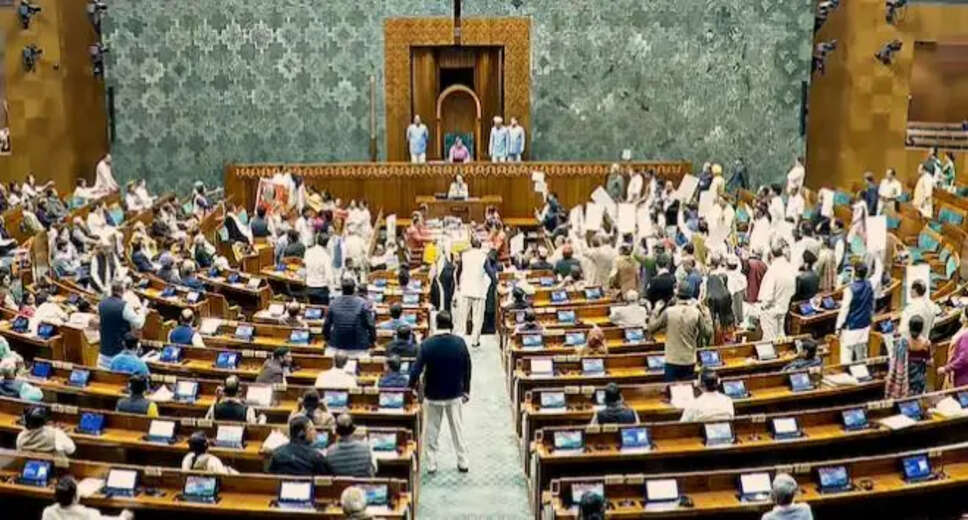
Government Takes Action Against Exam Paper Leaks
New Delhi: On Monday, the government presented a Bill in the Lok Sabha aimed at revising the anti-paper leak legislation, proposing harsher penalties that could include up to 10 years in prison and fines reaching Rs 50 lakh. This move comes shortly after widespread student protests regarding the NEET exam controversy, which led to the resignation of Dharmendra Pradhan as Education Minister.
The legislation was introduced by Jitendra Singh, Minister of State for PMO, amidst opposition protests demanding accountability for the police's actions against students during a protest organized by the Cockroach Janta Party (CJP) on July 20.
The Public Examinations (Prevention of Unfair Means) Amendment Bill, 2026, stipulates that investigations into paper leak incidents must be concluded within two months.
Under the proposed law, those found guilty of involvement in paper leaks or other unfair practices during exams could face imprisonment for a minimum of five years, with a maximum of ten years, alongside fines of up to Rs 50 lakh.
For organized offenses, the Bill suggests a minimum sentence of seven years and fines that could reach Rs 10 crore.
Currently, the existing law mandates a minimum of three to five years of imprisonment for cheating, while those engaged in organized cheating face five to ten years and a minimum fine of Rs 1 crore.
The Bill empowers all states and Union Territories to establish fast-track courts to expedite hearings and ensure trials are completed within three months of charges being filed.
Additionally, the Centre will have the authority to form a special task force to investigate paper leak cases under specific circumstances.
Following the Bill's introduction, Speaker Om Birla called upon senior opposition leaders, including Saugata Roy (TMC) and Manish Tewari (Congress), to voice their concerns. However, no one spoke, allowing Minister Singh to proceed with the Bill's introduction. Birla then encouraged members to engage in discussions regarding the NEET paper leaks.
Birla emphasized, "This is a crucial step towards enhancing the public examination process. Instead of protests, discussions should take place in the House. The government is open to incorporating suggested improvements."
Despite ongoing opposition protests, the Speaker adjourned the House until 2 PM.
The government decided to introduce this legislation following significant student protests led by the CJP concerning the NEET paper leak issue.
The opposition's response to the new Bill remains uncertain, with Rahul Gandhi, the Leader of the Opposition in Lok Sabha, indicating that their actions will depend on consensus.
The 2024 law was enacted amid escalating controversies surrounding paper leaks. Prior to this legislation, there was no specific law addressing unfair practices or offenses related to public examinations conducted by the central government and its agencies.
This Act aims to prevent unfair practices in public examinations overseen by various bodies, including the Union Public Service Commission (UPSC), Staff Selection Commission (SSC), and the National Testing Agency (NTA).
In response to student protests, Prime Minister Narendra Modi pledged to establish a law addressing cases like the NEET-UG paper leak, promising that accused individuals would be tried in fast-track courts.
The CJP concluded its 36-day protest after Pradhan's resignation and the government's acceptance of other demands.
On Sunday, Modi also announced the formation of a high-powered task force led by Infosys co-founder Nandan Nilekani to recommend reforms aimed at securing the examination system.
The Bill highlights recent incidents of question paper leaks and malpractices that undermine the transparency and integrity of the public examination system.
The amendment seeks to empower state governments and UT administrations to designate any session court as a special fast-track court for trying offenses under the proposed law.
It mandates that proceedings in these courts occur on a daily basis, ensuring trials are completed within three months from the date of filing the chargesheet.
The Bill also allows the central government to establish a special task force for investigating offenses when necessary.
Provisions within the Bill include the engagement of other government agencies by public examination authorities, the establishment of norms and guidelines, and the reporting of incidents involving unfair practices or offenses.
Pre-examination activities such as audits for examination readiness, candidate check-ins, biometric registrations, security measures, seat allocations, question paper preparations, and invigilation are also covered under the proposed norms.
The Bill outlines 15 illegal activities, including leaking question papers, tampering with OMR sheets, creating fraudulent websites, and issuing counterfeit admit cards.