
Navigating the Path to Becoming a Pilot in India
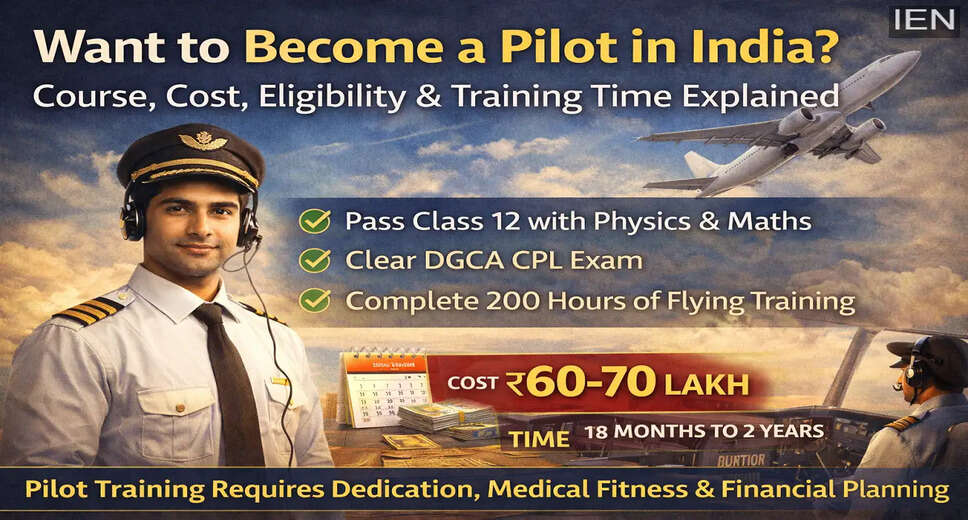
Introduction to a Career in Aviation
For many young individuals, the sight of airplanes flying overhead ignites aspirations of piloting them one day. A career as a pilot is often viewed as thrilling, prestigious, and lucrative. With the rapid growth of India's aviation industry, the need for qualified pilots is on the rise.
Opportunities in the Expanding Aviation Sector
The aviation sector in India has experienced consistent growth in recent years. The rise of new airlines, airports, and increasing passenger numbers have led to a high demand for skilled aviation professionals, particularly commercial pilots.
As airlines expand their fleets and routes, the requirement for trained pilots is anticipated to increase further, making aviation an appealing career choice for those passionate about flying and technology.
Educational Requirements for Aspiring Pilots
To embark on a career as a pilot in India, candidates must fulfill specific educational criteria.
The fundamental eligibility includes:
Completion of Class 12 with a minimum of 50% marks
Studying Physics, Mathematics, and English as core subjects
Meeting the eligibility standards set by the Directorate General of Civil Aviation (DGCA)
Certain airlines or training programs may impose additional requirements based on their selection processes.
Passing the DGCA Commercial Pilot License (CPL) Exam
Aspiring commercial pilots must secure a Commercial Pilot License (CPL) from the DGCA, which is the regulatory body for aviation in India.
The CPL exam is held four times annually, and candidates must pass various theoretical subjects before advancing to practical flying.
The ground training encompasses subjects such as:
Meteorology (weather science)
Air Regulations
Air Navigation
Radio Telephony
Aircraft Technical Knowledge
Candidates must achieve at least 70% in these written exams to qualify.
Training Stages: Ground and Flying
Pilot training typically consists of two primary phases: ground training and flying training.
Ground Training Overview
During this phase, students acquire theoretical knowledge about aviation, including aircraft systems, flight planning, weather conditions, and aviation regulations.
Flying Training Details
Upon passing the theoretical exams, candidates enroll in a DGCA-approved Flying Training Organisation (FTO).
They must complete approximately 200 hours of supervised flying experience to qualify for a Commercial Pilot License.
Alternative Path: Cadet Pilot Programs
In addition to traditional flying schools, several airlines offer Cadet Pilot Programs.
These initiatives are tailored to train candidates specifically for airline operations. Airlines select students through entrance exams and interviews, subsequently sponsoring their training at partner flying schools.
Successful candidates may be offered positions as first officers with the airline.
Medical Fitness Standards
Physical and mental fitness are crucial for aspiring pilots.
Candidates must pass DGCA-approved medical examinations that evaluate various health metrics.
Key medical requirements include:
Good vision and hearing
No color blindness
Overall physical fitness
Most airlines also require candidates to have a minimum height of around 153 centimeters, with significant height variations potentially disqualifying candidates from certain training programs.
Cost of Pilot Training in India
Pilot training is regarded as one of the most expensive professional training programs.
The total expense for becoming a commercial pilot in India—including CPL training, type rating, and airline training—ranges from ₹60 lakh to ₹70 lakh.
The exact cost may vary based on factors such as:
The training institute or flying school
Hours of aircraft training
Location of the training
Additional certification requirements
Due to the high costs, many aspiring pilots meticulously plan their finances before enrolling in training programs.
Duration to Become a Pilot
The overall time required to become a commercial pilot typically spans from 18 months to 2 years, influenced by training schedules and exam timelines.
This timeframe includes:
Ground school training
DGCA theoretical exams
Flying training hours
License approvals
A Rewarding Career with Promising Prospects
While the path to becoming a pilot demands commitment, discipline, and financial foresight, it presents excellent career opportunities and global prospects.
With the continuous expansion of India's aviation sector and airlines adding more aircraft to their fleets, the demand for trained pilots is expected to remain robust in the years ahead.
For those who aspire to soar high, thorough preparation, appropriate training, and a solid academic foundation can help transform that dream into reality.