
Key Facts About India's 80th Independence Day Celebration in 2026
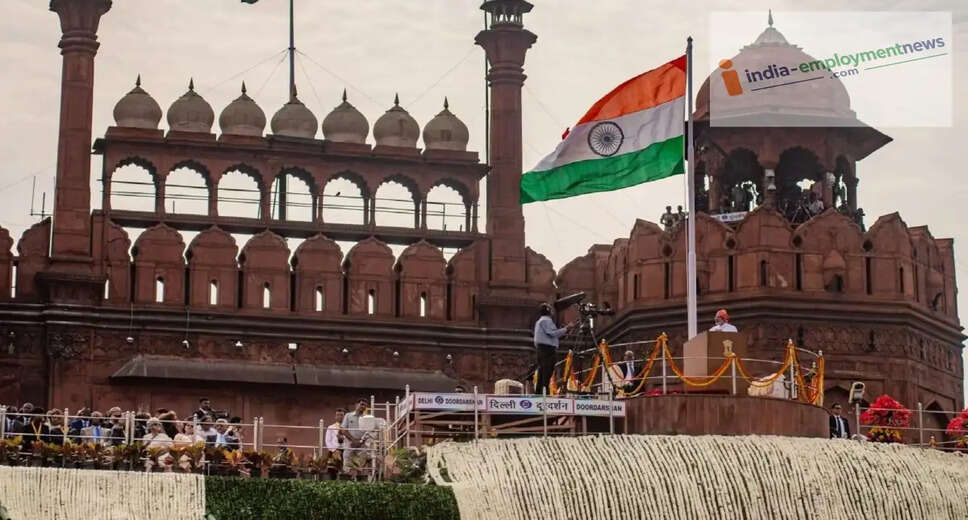
Celebrating 80 Years of Independence
In 2026, India will commemorate its 80th Independence Day, a significant milestone that reflects on the extensive struggle for freedom, the sacrifices made, and the political challenges faced throughout history.
Independence Day Overview
Independence Day is observed annually on August 15, marking the day in 1947 when India broke free from British colonial rule. This year, as we celebrate 80 years of independence, it's essential for students preparing for competitive exams like SSC, UPSC, CUET, NDA, and State PCS to be aware of key historical facts.
Important Historical Facts
1. Date of Independence
India achieved independence on August 15, 1947, as per the Indian Independence Act of 1947, which established India and Pakistan as independent dominions. The date was chosen by Lord Mountbatten, the last Viceroy of India, to coincide with the second anniversary of Japan's surrender in World War II, symbolizing peace over conflict.
2. Transition to Republic
Following independence, India was initially a dominion and only became a republic on January 26, 1950, when the Constitution was enacted. This distinction highlights the difference between Independence Day and Republic Day.
3. Constitution Adoption
The Indian Constitution was adopted by the Constituent Assembly on January 26, 1949, but it officially came into effect on January 26, 1950, marking India's transition to a republic.
4. First Prime Minister
Jawaharlal Nehru was the first Prime Minister of independent India, delivering his iconic "Tryst with Destiny" speech during a midnight session of the Constituent Assembly on August 14-15, 1947.
5. The 1857 Uprising
The revolt of 1857 is recognized as the first significant uprising against British rule, involving civilians and rulers from various regions uniting against colonial oppression.
6. Formation of the Indian National Congress
Established in 1885, the Indian National Congress played a crucial role in the freedom movement, with Dadabhai Naoroji among its founding members.
7. The Swadeshi Movement
The Swadeshi Movement gained traction after the Partition of Bengal in 1905, promoting Indian-made goods and boycotting British products.
8. Gandhi's Return
Mahatma Gandhi returned to India from South Africa in 1915, advocating for public participation and non-violent resistance in the struggle for independence.
9. Salt Satyagraha
In 1930, Gandhi initiated the Civil Disobedience Movement, highlighted by the Dandi March, which challenged British salt laws.
10. Quit India Movement
The Quit India Movement, launched in August 1942, called for immediate independence from British rule, with Gandhi's famous "Do or Die" slogan.
11. National Flag Adoption
India's national flag was adopted on July 22, 1947, just weeks before independence, featuring saffron, white, and green bands with a blue Ashoka Chakra.
12. National Emblem: Ashoka Chakra
The Ashoka Chakra, with 24 spokes, is derived from the Lion Capital of Ashoka and symbolizes the Wheel of Law. The flag's dimensions follow a 2:3 ratio.
13. Flag Hoisting Tradition
The Prime Minister hoists the national flag at the Red Fort on August 15, a tradition that began with Nehru, accompanied by a ceremonial guard and a 21-gun salute.
14. National Anthem Timeline
Contrary to popular belief, the national anthem was not created in 1947. Written by Rabindranath Tagore, it was officially adopted on January 24, 1950.
15. Legacy of Freedom Fighters
The freedom India enjoys today is the result of the sacrifices made by numerous freedom fighters, including Mahatma Gandhi, Subhash Chandra Bose, and many others.