
India's 2026-27 Budget: A Vision for Education and Healthcare Enhancement
Transforming Education and Healthcare through the Union Budget
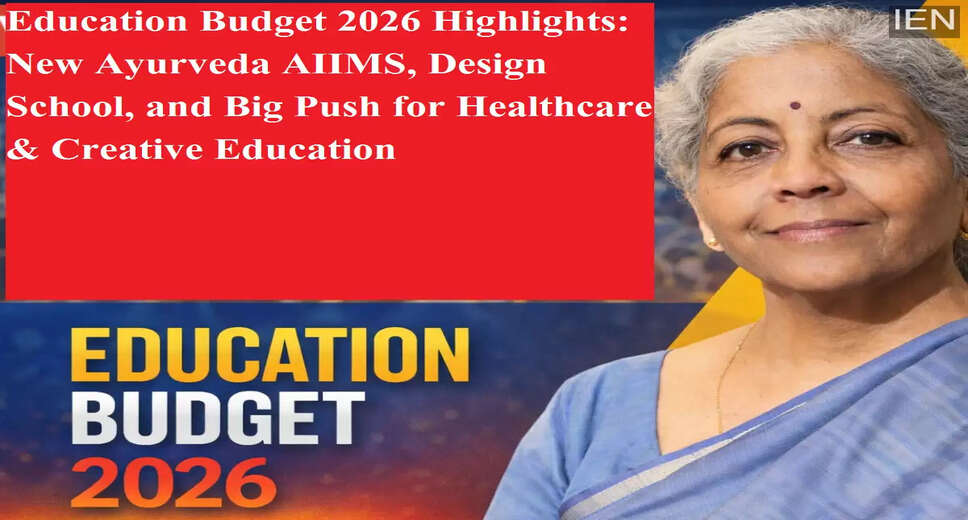
The Union Budget for 2026-27 has laid out an ambitious strategy aimed at enhancing India's education and healthcare-related skill development framework. Finance Minister Nirmala Sitharaman unveiled several significant initiatives that emphasize traditional medicine, allied health education, creative learning, and the establishment of industry-linked academic infrastructure. This approach reflects a long-term commitment to making education more aligned with employment opportunities while addressing the increasing global demand in healthcare, wellness, and creative sectors.
Global Promotion of Ayurveda and Traditional Medicine
A standout feature of the Education Budget 2026 is the plan to create three new All India Institutes of Ayurveda (AIIA) alongside three additional Ayurveda institutions. These initiatives aim to enhance research, training, and the global outreach of India's traditional medicine systems, which have gained international acclaim, especially following the COVID-19 pandemic.
During the budget presentation, the Finance Minister highlighted the growing global acceptance of Ayurveda. To cater to this demand, the government intends to bolster institutional capacity and ensure a steady supply of skilled professionals.
In addition to establishing new Ayurveda institutions, the budget proposes upgrading AYUSH pharmacies and drug testing laboratories to meet international certification standards. This initiative is expected to enhance quality assurance, increase exports of Ayurvedic products, and build global confidence in India's traditional healthcare systems.
Moreover, the World Health Organization's Global Centre for Traditional Medicine in Jamnagar will receive upgrades to facilitate advanced research, training, and international collaboration in traditional medicine.
Expansion of Healthcare Education and Allied Health Courses
The government has announced the introduction of 10 new allied health disciplines, including optometry, anesthesia technology, applied psychology, and behavioral health. Over the next five years, the aim is to train nearly 100,000 allied health professionals (AHPs) to meet the rising demand for skilled healthcare workers both in India and abroad.
This initiative is designed to strengthen India's healthcare workforce while creating substantial employment opportunities for youth in paramedical and support services.
Focus on Design and Creative Education
To foster innovation and creativity, the 2026 Budget proposes the establishment of a new design institute in eastern India. This institute will emphasize design thinking, innovation, and industry-relevant skills, equipping students for careers in emerging creative and design sectors.
Additionally, support will be extended to the Indian Institute of Creative Technologies (IICT) in Mumbai. With government backing, the institute will establish content labs in 15,000 secondary schools nationwide, allowing students to engage with digital content creation, media, design tools, and creative technologies from an early age.
Development of University Townships Near Industrial Hubs
In a significant infrastructure initiative, the central government plans to facilitate the creation of five university townships adjacent to major industrial and logistics hubs. Each township will accommodate multiple universities, colleges, research facilities, and residential complexes.
This model aims to enhance collaboration between industry and academia, promote applied research, and ensure that students acquire skills that align with real-world industrial needs.
Enhancing Professional Education in Smaller Cities
To broaden access to professional education beyond metropolitan areas, the government will support professional bodies such as ICAI, ICSI, and ICMAI. These institutions will develop short-term modular courses and practical toolkits designed to prepare 'corporate-ready' professionals in Tier-2 and Tier-3 cities.
This initiative is anticipated to boost employability among youth in smaller towns while addressing the increasing demand for skilled professionals in finance, compliance, and corporate services.
Promotion of Medical Tourism
Recognizing India's potential as a premier global healthcare destination, the 2026 Budget proposes the establishment of five medical tourism hubs across various states. These hubs will integrate healthcare services, education, and tourism infrastructure, further solidifying India's position in the global medical tourism arena.
Reviewing Education Budget Trends
In the previous financial year (2025-26), the education sector received a historic allocation of ₹1.28 lakh crore. Of this amount, ₹78,572 crore was designated for school education, while ₹50,077 crore was allocated to higher education. The consistent increase in funding over the years underscores the government's ongoing commitment to education-led development.
Overall Implications of the Education Budget
The Education Budget 2026 marks a transition towards integrated learning models that merge healthcare, creativity, technology, and industry relevance. By investing in Ayurveda, allied health education, design institutions, and university townships, the government aims to prepare India's youth for future-ready careers while reinforcing India's global leadership in traditional medicine and creative industries.