
Celebrating Atal Bihari Vajpayee's 101st Birth Anniversary: A Legacy of Reforms
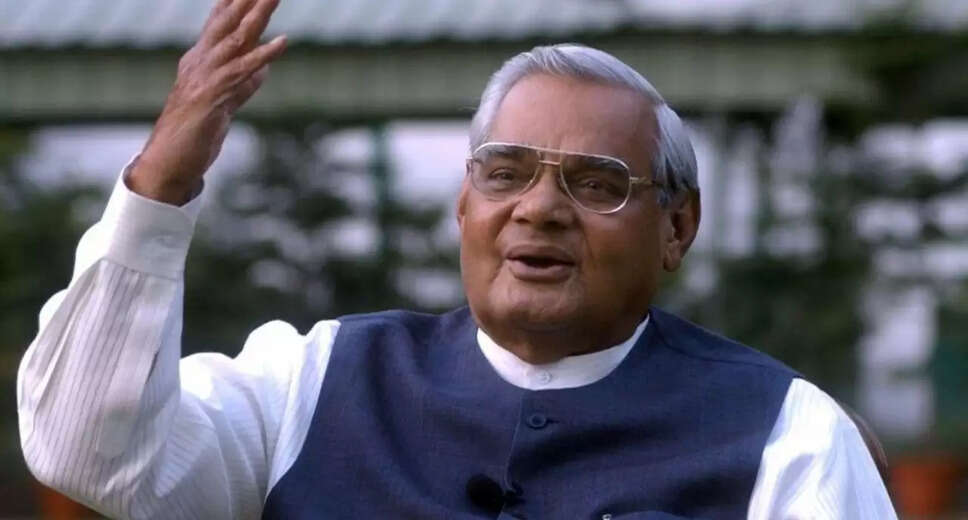
Honoring a Visionary Leader
New Delhi: On December 25, 2025, the nation commemorates the 101st birth anniversary of former Prime Minister Atal Bihari Vajpayee. He was the first non-Congress leader to serve a full term as Prime Minister. His leadership extended beyond mere political stability; he implemented significant reforms that laid the groundwork for modern India. Even on this chilly morning, discussions about his contributions are vibrant across social media and political circles.
The decisions made during his tenure from 1999 to 2004 brought transformative changes in education, taxation, telecommunications, aviation, and energy sectors, with effects still visible today. His reforms focused on the common citizen, infrastructure development, and economic strength, earning him the reputation of a symbol of good governance. Below are ten reforms that steered India towards a new direction.
Sarva Shiksha Abhiyan
Launched in 2000 by Vajpayee, this initiative marked the beginning of a primary education revolution in India. Aimed at providing universal primary education for children aged six to fourteen, the program sought to benefit nearly 20 million children. Within four years, the dropout rate decreased by 60%, laying the foundation for subsequent educational reforms, including the Right to Education Act.
Tax Reforms
Under the leadership of Vijay Kelkar, the task force on direct and indirect taxes (2002) became the cornerstone of modern tax reforms in India. It enhanced the use of PAN, improved tax administration, encouraged outsourcing, and provided better services to taxpayers. Its recommendations paved the way for reforms such as GST, the concept of a direct tax code, an electronic tax network, and ultimately the elimination of wealth tax.
National Pension System
In 2004, Vajpayee's government introduced the National Pension System (NPS) for new central government employees, transitioning from a defined benefit pension scheme to a contributory plan. Opened to the private sector in 2009, the NPS aims to reduce long-term pension liabilities, with full financial benefits expected to materialize in the 2040s.
Telecommunications Revolution
The new telecommunications policy of 1999, under Vajpayee's government, initiated a revolutionary change in India's telecom sector. In the late 1990s, mobile usage was minimal, but India quickly became a global leader in data consumption. This policy fostered competition, reduced costs, expanded connectivity, and laid the groundwork for the emerging digital economy in the coming decades.
Civil Aviation
Vajpayee's government established the foundation for private participation in airport development, a concept that emerged during his tenure and was implemented in 2006. This policy transformed airports in Delhi, Mumbai, Bengaluru, and Hyderabad into world-class facilities. The government also initiated the process of linking aviation turbine fuel (ATF) prices to market rates, marking the first step towards rationalizing aviation fuel costs.
Electricity Sector Reform
The historic Electricity Act of 2003, introduced by Vajpayee's government, allowed states to separate generation, transmission, and distribution, restructuring the electricity sector. This reform opened the sector to private participation and competition. The government also proposed ultra-mega power plants with capacities exceeding 4 gigawatts to achieve economies of scale and strengthen India's long-term electricity production capabilities.
Energy Incentives
During Vajpayee's tenure, India made its first investments in foreign oil and gas assets, starting with a $1.7 billion investment in Russia's Sakhalin region, followed by investments in Sudan. The government also initiated the removal of price controls on petroleum, although this came at a political cost. The mandatory blending of ethanol with petrol laid the groundwork for renewable fuel policies revived by subsequent governments.