
BCI Offers Special Enrollment Relief for Law Students with Attendance Issues
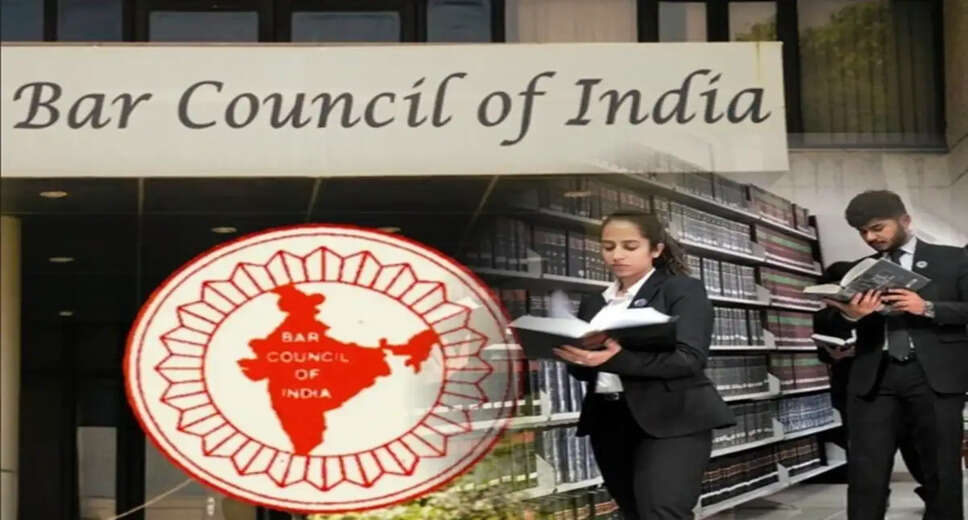
BCI's New Enrollment Policy
BCI Announcement: The Bar Council of India (BCI) has introduced a significant measure to assist law students struggling with enrollment due to attendance deficiencies. This one-time special provision ensures that eligible law graduates, who are under the Supreme Court's protection, will not face denial of enrollment based solely on attendance issues.
This policy is applicable to students whose academic sessions were active at the time of the Delhi High Court's ruling on November 3, 2025, and who received subsequent protection from the Supreme Court's order dated July 21, 2026. However, candidates must still meet all other legal criteria for enrollment.
The BCI's decision comes in response to appeals from students at the Faculty of Law, Delhi University, who reported that attendance disputes prevented their universities from issuing necessary attendance or attendance-cum-character certificates, thus obstructing their ability to enroll as advocates.
Enrollment will not be hindered solely due to attendance deficiencies.
The BCI has made it clear that if a candidate is included in the category protected by the Supreme Court and the relevant academic session, their application for enrollment will not be rejected or delayed solely due to attendance shortfalls during that protected timeframe.
The reasoning is that an attendance shortfall—despite allowing a student to take exams and earn an LLB degree under legal protection—should not be used against them in the enrollment process.
Eligibility Criteria for Students:
To benefit from this special arrangement, candidates must have completed an LLB program from a BCI-recognized institution and an approved Centre of Legal Education. They must have been allowed to sit for final or supplementary exams in line with the rules of the protected academic session and must have successfully passed to obtain a valid LLB degree. Additionally, candidates must comply with the stipulations outlined in Sections 24 and 24A of the Advocates Act, 1961, along with other relevant enrollment regulations.
Nationwide Implementation of the System:
The BCI has emphasized that this relief is not exclusive to Delhi University students. Any candidate who falls within the protected categories and academic sessions as per the Supreme Court's order dated July 21, 2026, and meets the other legal requirements can take advantage of this provision.
Universities will not need to modify a candidate's past attendance records or classify them as having regular attendance. Instead, institutions may certify that the student's admission was legitimate, that they were part of the relevant protected session, were allowed to take the examinations, completed the LLB course, and possess a valid degree.
The BCI has also stated that this decision is a one-time, exceptional, and transitional measure, meaning it does not provide any leniency in standard attendance rules for future cohorts or other academic sessions.