
Asian Games 2026: Insights into Gold Medal Composition and Weight
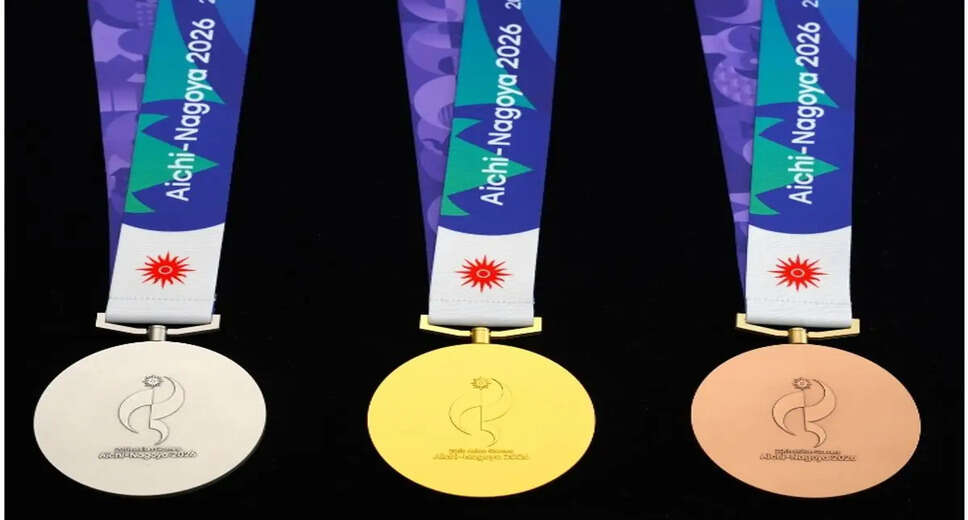
Overview of Asian Games 2026
As the Asian Games 2026 unfold in Japan, India has proudly secured eight gold medals thus far. China leads the medal standings with the most golds. For athletes, winning gold is a pinnacle achievement, representing their dedication and success. However, it's interesting to note that gold medals awarded at prestigious events like the Olympics and Asian Games are not purely made of gold.
Composition of Gold Medals
Curious about the actual gold content in these medals? Let's delve into the specifics.
At the ongoing Asian Games in Aichi-Nagoya, Japan, all gold medals share a uniform design and weight. Each gold medal weighs around 265 grams.
Gold Content in the Medal
The gold medal comprises approximately 264 grams of pure silver, with a gold plating of at least one gram. Thus, despite being termed a gold medal, its primary component is silver.
Specifications of the Medals
The medal features a diameter of 80 millimeters and a thickness of 5 millimeters. The design emphasizes environmental sustainability, utilizing metals sourced from electronic waste.
Weights of Silver and Bronze Medals
Silver Medal
The silver medal at the Asian Games 2026 consists entirely of 264 grams of pure silver, with no other metals involved in its creation.
Bronze Medal
The bronze medal weighs 222 grams and is crafted from red brass, which is composed of 95% copper and 5% zinc. This translates to approximately 210.9 grams of copper and 11.1 grams of zinc.