
Alarming School Dropout Rates Highlight Need for More Secondary Education Facilities
Overview of School Dropout Rates
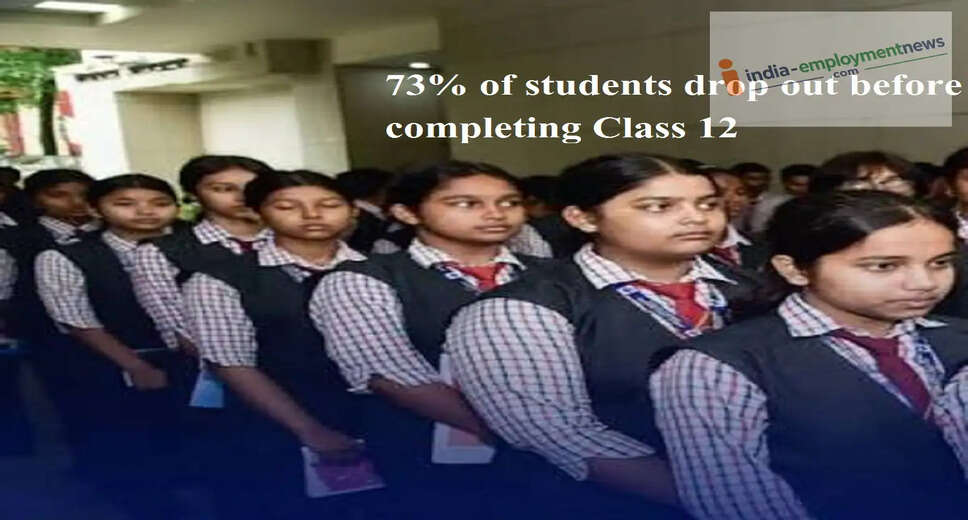
A staggering 73% of students do not complete their education up to Class 12. This alarming statistic comes from a recent report indicating that the availability of secondary and higher secondary schools is significantly lower than that of primary schools.
Insights from the Parliamentary Committee Report
Despite improvements in educational standards, there is a noticeable decline in both the number of schools and student enrollment. The parliamentary committee's findings reveal that around 73% of students drop out before reaching higher secondary education. This information was detailed in the 10th report of the Estimates Committee (18th Lok Sabha).
Enrollment Disparities
Dropout Statistics Overview
The report highlights a stark contrast in student enrollment figures. According to UDISE 2024-25 data:
- Primary classes: 61,845,033 students
- Classes 6 to 8: 40,893,978 students
- Secondary level: 23,668,220 students
- Higher secondary level: 16,417,949 students
These statistics confirm that approximately 73% of students do not complete their higher secondary education.
Decline in School Numbers Beyond Primary Level
School Availability
The committee's report, referencing UDISE 2024-25 data, states that there are 1,092,671 government and government-aided schools across the nation. The breakdown is as follows:
- Primary level: 911,032 schools
- Upper primary level (Classes 6 to 8): 412,805 schools
- Secondary level: 161,808 schools
- Higher secondary level: 90,866 schools
This data illustrates a significant drop in the number of schools as education levels increase, raising concerns about the accessibility of higher education.
Recommendations for Improvement
Enhancing Secondary and Higher Secondary Education
The parliamentary committee urges the Ministry of Education to focus on expanding the number of secondary and higher secondary schools. They recommend upgrading existing primary and secondary institutions to full-fledged higher secondary schools, which would facilitate local access to higher education and potentially lower dropout rates. The committee emphasizes the need for collaboration between the Ministry of Education and state governments to achieve these goals.
Concerns for Differently-Abled Students
Infrastructure Challenges
The report also raises issues regarding the facilities available for differently-abled students. It notes that over half of the schools in the country lack adequate infrastructure. According to UDISE 2024-25 data:
- Only 533,143 out of 1,471,437 schools have toilets for Children with Special Needs (CWSN).
- Only 808,466 schools are equipped with ramps and handrails.
These figures highlight the urgent need for improved facilities to support differently-abled students.