
Students Push for Increased JEE Advanced Attempts Amidst Ongoing Debate
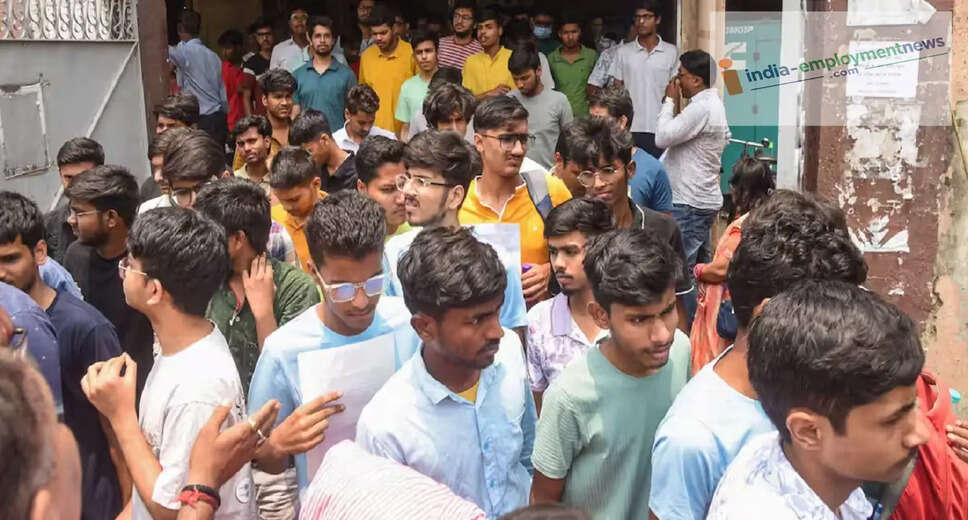
Call for Change in JEE Advanced Attempt Rules
A growing number of students are advocating for a revision of the current regulations concerning the number of attempts permitted for the JEE Advanced examination. They are requesting that candidates be allowed to take the exam three times instead of the current two.
Across the nation, IIT aspirants are voicing their concerns regarding the existing rules for JEE Advanced attempts. They argue that candidates should have the chance to appear for the exam three times, rather than being limited to two attempts. Over 12,000 students have submitted a petition to the Ministry of Education, the IIT Council, and the Joint Admission Board, urging either an increase in attempts to three or the option to use the two attempts over three consecutive years.
Current JEE Advanced Attempt Regulations
At present, candidates are allowed to take the JEE Advanced exam a maximum of two times within two consecutive years. The first attempt must occur in the same year that the student completes Class 12, with the second attempt available the following year. Many students believe this rule poses challenges, as additional time for preparation could lead to improved performance.
Comparison of JEE Main and JEE Advanced Attempt Rules
In their petition, students have pointed out the differences in attempt regulations between JEE Main and JEE Advanced. While JEE Main provides multiple opportunities for candidates to enhance their scores, JEE Advanced restricts them to just two attempts. Specifically, JEE Main allows six attempts over three years, with the top 2.5 lakh candidates qualifying for JEE Advanced based on their JEE Main results. Students argue that since JEE Main already filters candidates for JEE Advanced, allowing an additional attempt for JEE Advanced would not compromise the exam's competitive integrity or the number of available seats.
Concerns Over Limiting Student Potential
Students contend that JEE Advanced is not solely a test of memorization but requires strong analytical skills. They emphasize that each student's potential is unique; many need extended preparation—often beyond a single year—to fully grasp concepts and enhance problem-solving abilities. Furthermore, they note that JEE Advanced is a high-stakes, single-day exam where factors like health issues, stress, or minor mistakes can greatly affect performance. Thus, they argue that two attempts are inadequate to truly reflect a student's capabilities.
Citing NEET and JEE Main Regulations
To bolster their case, students have referenced the NEET exam, which imposes no limits on attempts or candidate age. They also highlighted the six attempts available for JEE Main, questioning why JEE Advanced, which is part of the same engineering entrance framework, restricts candidates to only two attempts. They argue that this inconsistency denies many capable students a fair chance to demonstrate their skills.
Historical Context: COVID-19 Adjustments
The push for three attempts at JEE Advanced is not a recent development; students have been advocating for this change for several years. They have pointed to the precedent set during the COVID-19 pandemic when an additional attempt was granted for JEE Advanced. Candidates argue that this adjustment showed that the examination system can be flexible when necessary, and they believe that allowing an extra attempt would not diminish the exam's quality but rather provide deserving students with a better opportunity to succeed.