
Essential AI Skills to Master for Future Career Success
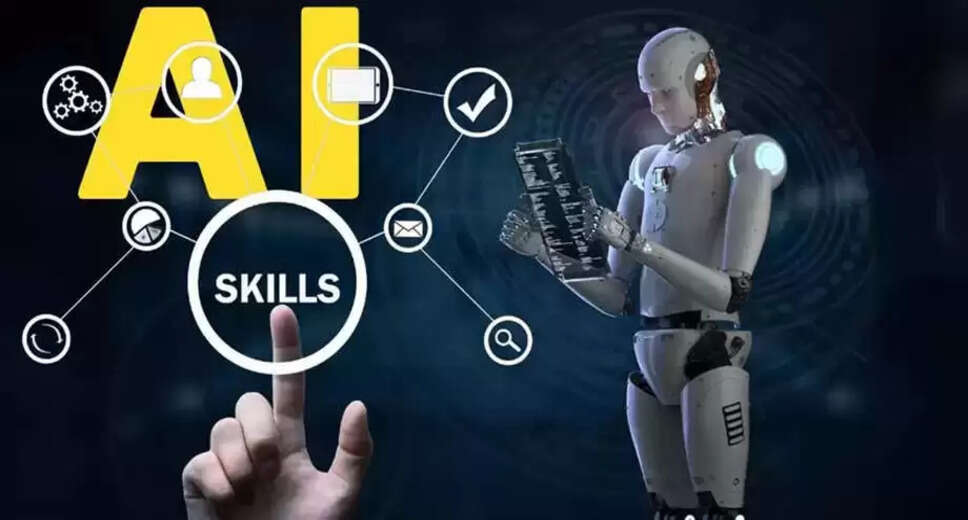
Key AI Skills for Career Advancement
Essential AI Skills: Are you looking to secure your career for the future? If so, it's time to immerse yourself in the realm of Artificial Intelligence (AI). By the year 2026, AI will evolve from a mere technological concept to a fundamental component across all sectors. The need for individuals proficient in AI and its applications is on the rise. Acquiring AI skills will not only help you tackle daily challenges but also enhance your productivity.
As AI and machine learning become increasingly prevalent, the landscape of career opportunities is shifting rapidly. Those who fail to acquire these essential technical skills may struggle to remain competitive in the job market. By 2026, possessing AI skills will equip you for high-demand positions, offering not just lucrative salaries but also safeguarding your job against automation. If you want to be in demand by employers, start mastering these five crucial AI skills today.
Five AI Skills to Focus on by 2026
These five AI competencies will be invaluable across various industries. Excelling in them will not only facilitate career progression but also unlock numerous new job prospects:
1. Prompt Engineering
This is currently one of the most sought-after AI skills! Prompt engineering involves knowing how to effectively communicate with AI models (like ChatGPT and Gemini) to obtain the most accurate and beneficial results. It’s about mastering the art of interaction with AI. A well-crafted prompt can significantly boost your productivity.
Importance: AI tools are being integrated into every sector. The individual who can effectively guide these tools is now a highly valuable asset.
Learning benefits: Enhancements in research, content creation, programming, and data analysis.
2. Proficiency in Generative AI Tools
Being able to utilize generative AI (which produces new content, images, or code) will become essential by 2026. Familiarity with tools like Midjourney for image creation or CoPilot for coding will be crucial.
Importance: It fosters creativity and efficiency, enabling you to achieve more in less time.
Career advantages: Direct applications in marketing, design, content creation, and software development.
3. Understanding AI Ethics and Governance
As AI begins to influence decision-making, ensuring that these decisions are fair, safe, and lawful is vital. Professionals knowledgeable in AI ethics play a key role in ensuring responsible AI usage within organizations.
Importance: To reduce legal risks and biases.
Career prospects: High demand in compliance, legal, and policy-related roles.
4. AI Data Analysis and Visualization Skills
The ability to swiftly analyze large datasets using AI tools and present the insights clearly is a specific and valuable skill. This capability transitions you from merely collecting data to becoming a decision-maker.
Importance: Every organization requires this skill set to comprehend and forecast market trends.
Learning advantage: Aids in formulating better business strategies.
5. Utilizing No-Code/Low-Code AI Platforms
Leveraging low-code or no-code platforms (like Google AutoML or Azure Machine Learning Studio) to develop AI applications without needing extensive coding expertise. This approach makes AI accessible to both technical and non-technical professionals.
Importance: It accelerates the implementation of AI solutions within organizations.
Career benefits: Rapid growth in positions related to project management and product development.