
Transforming Business Education: The Impact of AI on Learning Experiences
The Disruption of Business Education

AI's Role in Redefining Learning Experiences
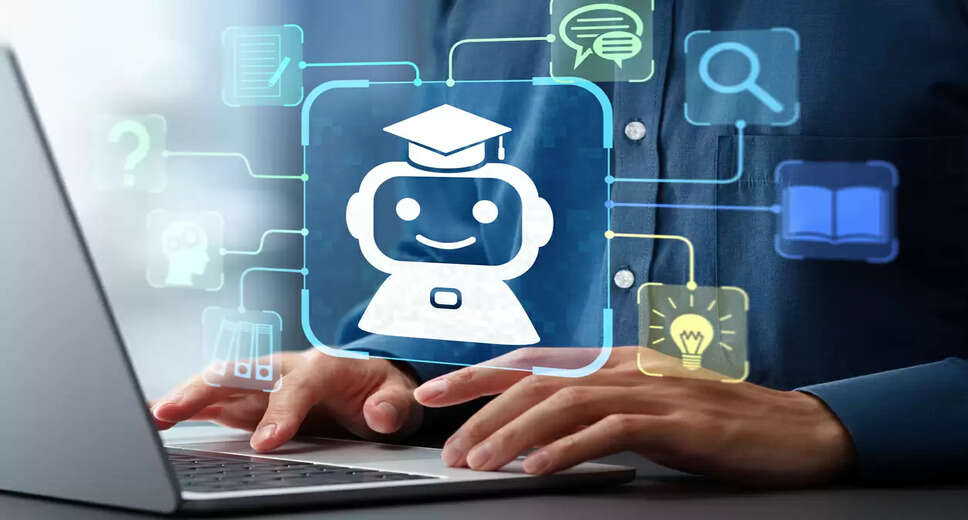
Many business schools are incorporating AI tools merely for the sake of it, which is ineffective. AI should fundamentally alter what students can achieve. Previously, all students were taught uniformly at the same pace, regardless of their individual needs. Now, with AI, students can learn at their own speed. Our AI tutor covers the technical material before class, allowing students to grasp the basics beforehand. Consequently, class time can be dedicated to tackling complex problems, engaging in live discussions, and making decisions that require a professor's guidance. This approach ensures that every student can attain the same level of proficiency, even if their learning paths differ significantly. AI eliminates the limitations that previously forced all students to progress together.
In the business realm, challenges do not arise in a sequential manner by subject. For instance, a pricing decision may require insights from marketing, financial modeling, and supply chain knowledge all at once. Traditional education often struggles to keep pace with this reality. A student may encounter a financial query while strategizing, but the finance professor's office hours might not align with the urgency of the situation.
AI tutors change this dynamic. Our students engage in live business projects, and when they encounter a gap in knowledge, the AI tutor is available to assist them at that critical moment. Moreover, AI tutors do not operate in isolation; if a student inquires about pricing strategy, the tutor can immediately relate it to relevant financial metrics, competitive positioning, and operational constraints, reflecting the interconnected nature of business challenges.
The solution lies not in better explanations but in having expertise accessible precisely when it is needed, rather than being constrained by academic schedules.
Maintaining Human Interaction in an AI-Driven World
With AI capable of providing instant answers to technical queries, the value of human interaction increases. A common error among educational institutions is attempting to maintain the status quo, including office hours and faculty availability for all matters. This approach can overwhelm professors. Instead, faculty time should be reserved for situations that require human judgment. At SP Jain Global, students acquire technical knowledge through AI, followed by sessions where they must articulate and defend their reasoning. Faculty challenge them with questions like, “Why did you overlook this risk? What assumption have you not questioned?”
The human element is preserved not by resisting technology but by ensuring that faculty time is focused on meaningful discussions that foster student growth.
Enhancing Employability Through AI
Traditionally, students prepared for interviews, participated in campus recruitment, and often faced rejection without understanding the reasons behind it. Was it their response structure? Their hesitation on financial topics? Their body language? They would receive vague feedback like “not a fit” and repeat the same mistakes in subsequent interviews.
AI changes this scenario. We have developed a Job Preparation Tutor (JPT) designed by students for students. This tool predicts potential interview questions, allows for mock interviews, and provides detailed feedback for improvement. Students can practice as many times as needed, unlike with a human tutor.
Through this process, a student can practice, fail, understand the reasons for their shortcomings, adjust their approach, and try again within minutes. By the time they face a real recruiter, they have effectively condensed what used to take years of interviews into just a few weeks of AI practice. The AI does not merely teach interview techniques; it provides clear, actionable insights on what works and what doesn’t, enabling timely improvements before opportunities slip away.
Promoting Inclusivity in Learning
For centuries, education has been delivered at a uniform pace, labeling those who succeed as “talented.” Consider a student from a lesser-known engineering college who possesses strong analytical skills but lacks experience in writing business cases. In a traditional classroom, they might either struggle to keep up or fall behind while others advance.
With AI, this student can practice case analysis multiple times before their work is evaluated, developing their skills at their own pace without the fear of asking “basic” questions in front of peers.
This approach is not solely about speed; it also addresses background disparities. Students from non-business families may not intuitively grasp corporate terminology or industry context. AI does not penalize them for needing clarification on terms like “EBITDA.”
Moreover, AI can challenge high-performing students by providing them with more complex scenarios, encouraging deeper analysis without hindering the progress of their peers.
The equity issue is not about some students being slower; it’s about a system that previously required everyone to advance together. AI effectively dismantles this constraint.