
Controversy Surrounds NCERT's Depiction of the Dancing Girl Statue
Introduction to the Controversy
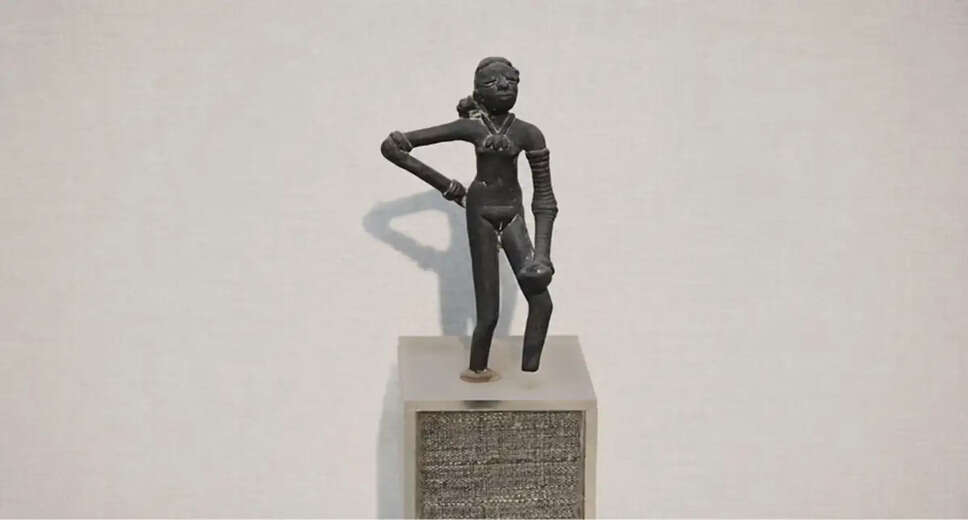
A debate has emerged regarding the 'Dancing Girl', a renowned bronze sculpture from Mohenjo-daro, which is one of the most iconic artifacts from the Indus Valley Civilization. The contention arises from its representation in NCERT's latest Class 9 art education textbook titled 'Madhurima'.
Discrepancies in Depictions
In the chapter on 'History of Arts', the upper part of the 'Dancing Girl' is illustrated in a manner that conceals the anatomical features visible in the original piece. The shading applied in the image gives the impression that the statue's nude torso is covered.
Comparison with Class 6 Textbook
Interestingly, the same statue is portrayed in a much more authentic manner in NCERT's Class 6 Social Science textbook. This inconsistency has led to inquiries about the differing presentations of the same historical artifact in two distinct educational resources.
Insights from Michel Danino
Response from the Textbook Development Committee Head
Michel Danino, who led the committee responsible for developing NCERT's new Class 6 Social Science textbooks, addressed the issue by stating that he had been informed that the image of the 'Dancing Girl' was deemed "not suitable for the age group".
In an interview, Danino expressed his disagreement with this viewpoint, noting that his team had consulted with Class 6 educators, who indicated that there had never been any concerns regarding the 'Dancing Girl' statue.
Danino further commented that perceiving nudity as inappropriate reflects an antiquated Victorian perspective. He emphasized that such a stance appears contradictory, particularly when the aim is to decolonize the Indian educational framework.