
Kalyani Devi Government High School: A Struggle for Basic Amenities in Raurkela
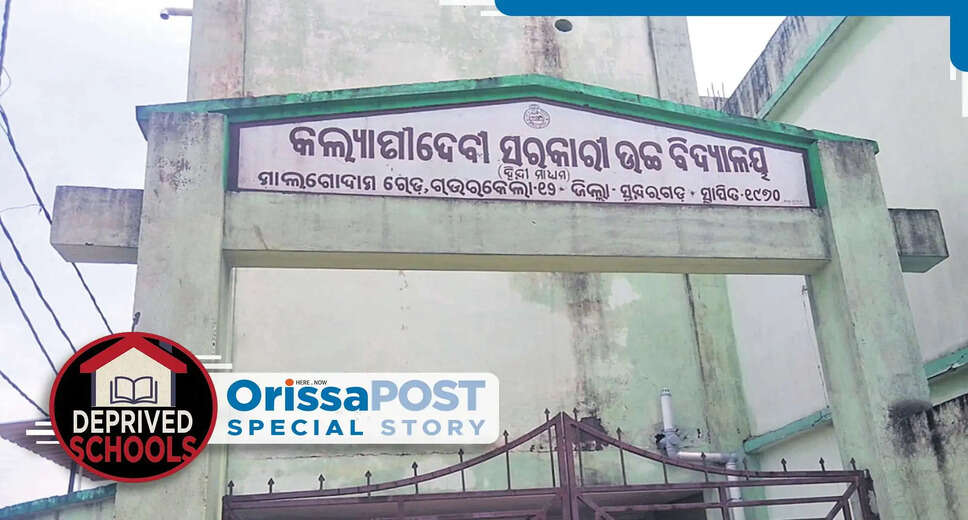
Challenges Faced by Kalyani Devi Government High School
By Biplab Ranjan Dash
Raurkela: Despite ongoing government initiatives aimed at enhancing educational quality and infrastructure, students at Kalyani Devi Government High School, established in 1970, continue to encounter significant challenges due to a lack of essential facilities.
The school's current state raises concerns regarding the effectiveness of the government's school transformation program, which has allocated considerable funds. Fundamental necessities such as safe drinking water, sufficient classrooms, toilets, and a proper drainage system remain inadequate, affecting both teaching and administrative functions. The institution serves 765 students from Class I to X, comprising 372 boys and 393 girls.
With only 10 classrooms and 34 teachers, the existing classroom space is insufficient for the number of students, complicating lesson delivery. For instance, Class IX has 117 students, necessitating the splitting of lessons into two sessions. Additionally, the school lacks a reliable drinking water source. While other schools have access to piped water, this facility is unavailable here.
A drinking water-cooling machine has been out of service for months due to neglect. Although separate toilets exist for boys and girls, their conditions are subpar, with flooring issues requiring urgent repairs. The most pressing concern is the drainage system.
The absence of an effective drainage system results in waterlogging after even light rainfall, causing rainwater to seep into classrooms and the administrative office, disrupting educational activities. This situation also hampers student movement during the rainy season.
According to the Education department, Kalyani Devi Government High School received government grants of Rs 2,80,540 for the 2024-25 fiscal year and Rs 1,75,300 for 2025-26. Furthermore, the school benefited from substantial funding under the previous government's 5T school transformation initiative.
Despite these financial resources, the school's fundamental issues remain unaddressed. There is no transparency regarding the expenditure of the funds allocated over the past two years. Headmistress Namita Dash has reported the various challenges to local legislators and senior officials, yet no permanent solutions have been implemented.
Sachidevi Paramanik, president of the school management committee, stated that the local MLA and relevant authorities have been made aware of the drainage, classroom, and infrastructure issues. She expressed optimism that development efforts would commence soon. Block Education Officer (BEO) Suprabhat Behera assured that the drainage concerns would be communicated to the Rourkela Municipal Corporation, and necessary actions would be taken to resolve the school's other infrastructure challenges.